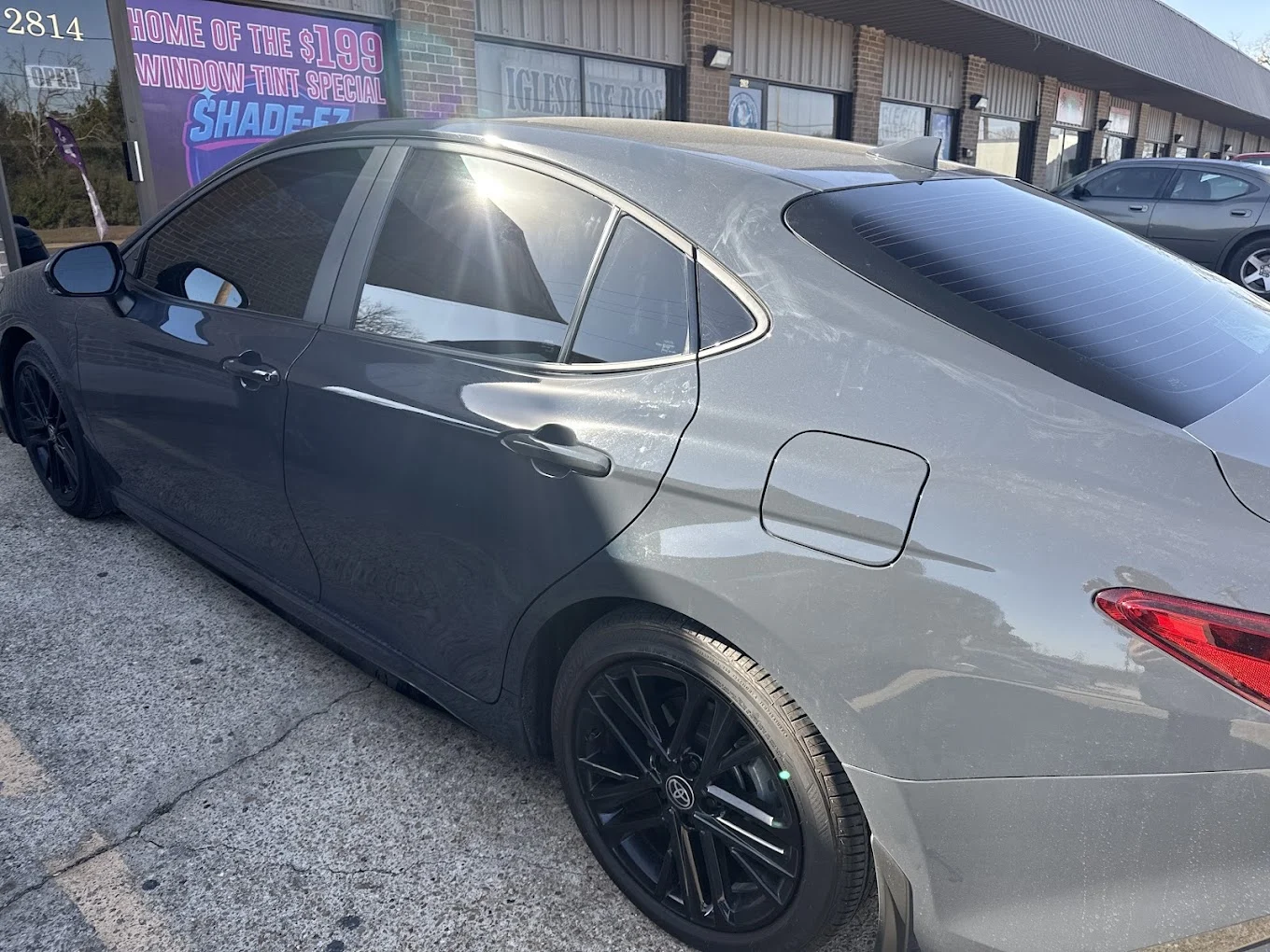
Ceramic vs carbon window tint is the first real choice most Bryan, TX drivers face when pricing a tint job. Both films block UV and cut cabin heat, but perform differently in a Brazos Valley summer of long, sunny afternoons. Shade-Ez installs HITEK carbon and ceramic film in Bryan, and this guide compares heat, price, signals, warranty, and Texas law.
Table of Contents
- Which Is Better, Ceramic or Carbon Window Tint?
- How Does Carbon Window Tint Perform in Texas Heat?
- How Does Ceramic Window Tint Perform in Texas Heat?
- How Do Tint Shades Change Carbon and Ceramic Performance?
- How Much More Does Ceramic Tint Cost in Bryan, TX?
- Do Carbon and Ceramic Tint Differ on Signals and Warranty?
- How Do Drivers Read IR, UV, and TSER on a Tint Spec Sheet?
- Does a Darker Tint Reject More Heat Than a Lighter One?
- How Does Standard Dyed Film Compare to Carbon and Ceramic?
- Who Should Choose Carbon and Who Should Choose Ceramic?
- What Should Drivers Ask an Installer Before Choosing Film?
- Does Texas Tint Law Treat Ceramic and Carbon Differently?
- Ceramic or Carbon Window Tint: What Should Bryan Drivers Choose?
- Frequently Asked Questions
Which Is Better, Ceramic or Carbon Window Tint?
Ceramic tint is better for heat rejection, and carbon tint is better for budget. Both are non-metallic films, and HITEK states its films block up to 99 percent of UV light. The real gap is infrared, the part of sunlight that makes a parked car feel like an oven.
HITEK Ceramic IR rejects 75 percent of infrared at 5 percent VLT. HITEK Carbon IR rejects 62 percent at the same shade. That 13-point difference is most noticeable on long summer afternoons in Bryan and College Station.
Bryan and College Station sit in the Brazos Valley, where summers are long and sun hits parked cars for hours. Open-air parking near Texas A&M leaves windows exposed through the afternoon. Film choice affects how hot a cabin gets before the air conditioner catches up.
| Feature | Carbon IR | Ceramic IR |
|---|---|---|
| Infrared rejection (at 5% VLT) | 62% | 75% |
| Total solar energy rejected (TSER) | Not listed by HITEK | 65% |
| UV blocking | Up to 99% | Up to 99% |
| Signal interference | None, non-metallic | None, non-metallic |
| Color | Neutral | Neutral |
| Relative cost | Lower | Higher |
| Best for | Daily UV and heat control on a budget | Maximum heat rejection in long summers |
How Does Carbon Window Tint Perform in Texas Heat?
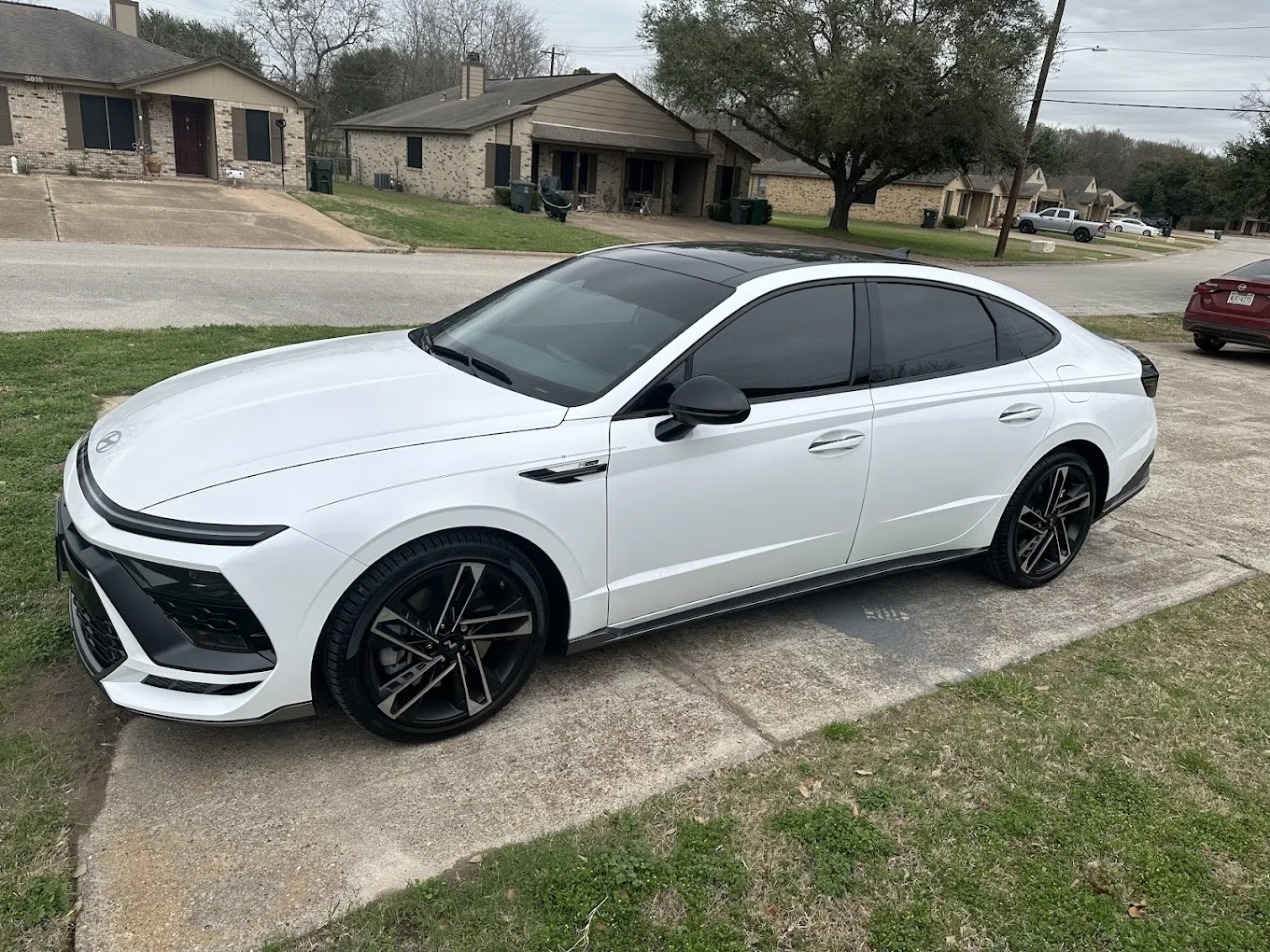
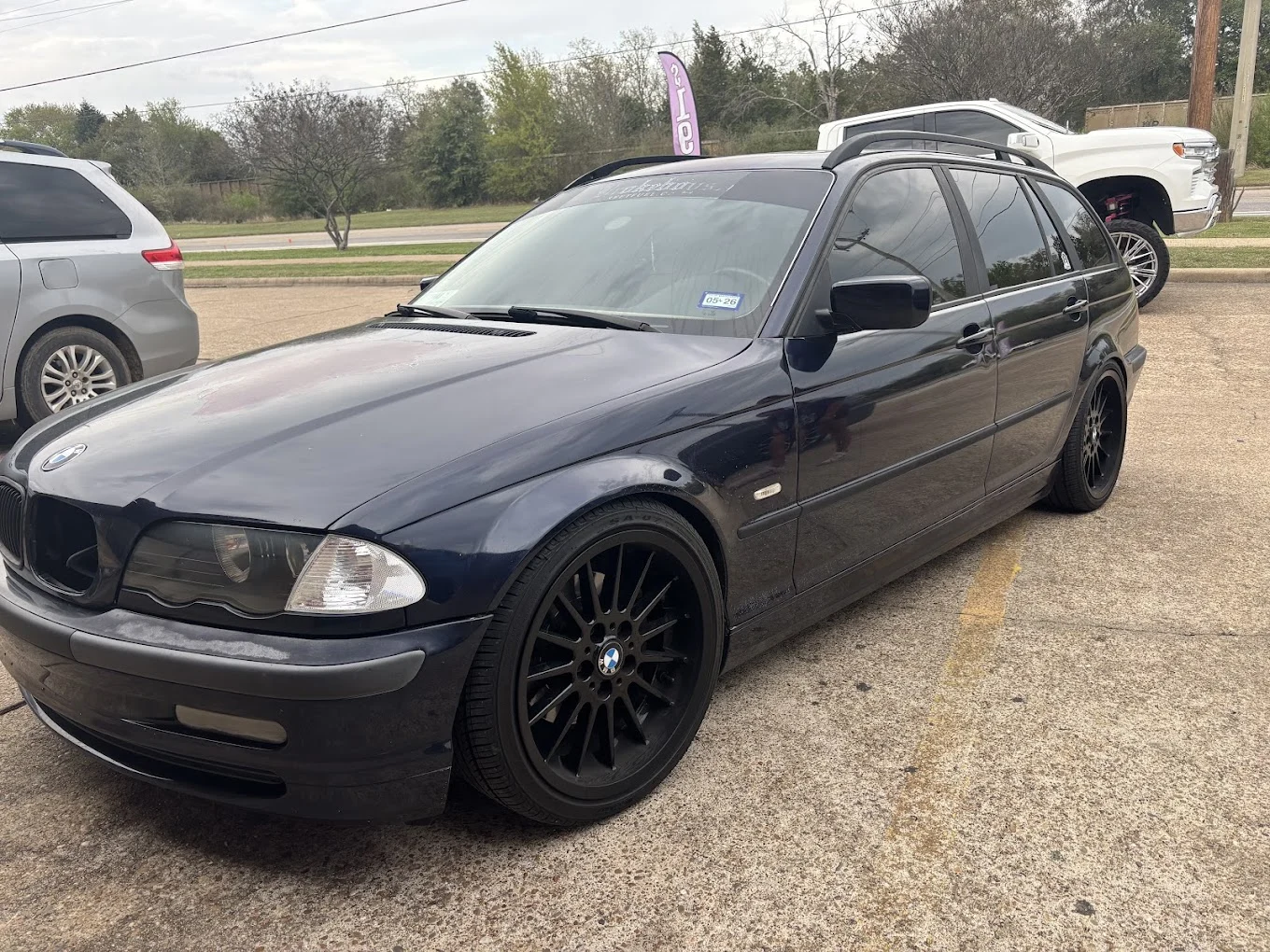
Carbon film uses carbon nanoparticles rather than dye. HITEK lists the Carbon IR color as neutral. The film is 1.5 mil thick and rejects 62 percent of infrared at 5 percent VLT.
Carbon sits in the middle of the HITEK lineup. Standard dyed film is the entry-level option, and ceramic is the premium option. Carbon gives real heat control without the ceramic price premium.
Carbon suits daily commuters, students parking near Texas A&M, and first-time tint buyers. Dashboards and seats still gain strong protection from direct Brazos Valley sun.
How Does Ceramic Window Tint Perform in Texas Heat?
Ceramic film adds heat-blocking particles to a non-metallic construction. HITEK Ceramic IR rejects 75 percent of infrared at 5 percent VLT and 65 percent of total solar energy. Those are the highest figures listed for any HITEK film Shade-Ez currently offers.
TSER stands for total solar energy rejected. It measures how much heat a film blocks across visible light, infrared, and UV together. A film that handles all three keeps the cabin cooler once the engine and air conditioner are running.
Drivers can review the full lineup on the page for HITEK window tint packages in Bryan, TX. Whole Car, Front Two Window, and Sides and Rear packages are available in carbon or ceramic.
How Do Tint Shades Change Carbon and Ceramic Performance?
The HITEK heat numbers above are measured at 5 percent VLT, the darkest shade. Lighter shades let in more visible light, so they generally reject less heat. Shade choice and film type work together.
HITEK offers five shades: 5, 20, 35, 50, and 70 percent VLT. The 35 percent shade is the popular middle ground. The 50 percent shade keeps strong heat rejection with a lighter look, and 70 percent is nearly clear for windshields.
Sides and Rear packages cover everything behind the driver and leave the front windows clear. Drivers who want matching color on every window choose the Whole Car package instead.
| Shade (VLT) | Look | Typical use |
|---|---|---|
| 5% | Darkest, maximum privacy | Rear glass where legal |
| 20% | Dark, keeps night vision | Rear side windows |
| 35% | Popular middle ground | Front and rear windows |
| 50% | Light, strong heat rejection | Drivers wanting a subtle look |
| 70% | Nearly clear | Windshield |
How Much More Does Ceramic Tint Cost in Bryan, TX?
Ceramic costs more than carbon on every vehicle type. Bryan market ranges for 2026 side and rear glass run $250 to $500 for carbon on a sedan. Ceramic on the same sedan runs $375 to $700.
| Vehicle | Carbon | Ceramic |
|---|---|---|
| Sedan or coupe | $250 to $500 | $375 to $700 |
| SUV or truck | $300 to $550 | $425 to $900 |
These are market ranges, not exact quotes. Glass size, shade, and package change the final number.
Shade-Ez sells HITEK film in Whole Car, Front Two Window, and Sides and Rear packages. Each package can be priced in carbon or ceramic.
Bryan & College Station, TX
Price Carbon and Ceramic Side by Side
Bryan drivers weighing carbon against ceramic can get a priced quote for each HITEK film on their vehicle and shade. Ask for both priced side by side on the same windows. Call (979) 481-8468 to compare real numbers and choose the right package for the vehicle.
Do Carbon and Ceramic Tint Differ on Signals and Warranty?
Signals pass through both films equally. HITEK describes all of its films as non-metallic, with no metal layers. That helps preserve GPS, Bluetooth, and phone signals, so signal strength should not decide the choice.
Warranty coverage depends on the film selected. HITEK offers lifetime coverage on qualifying installs, plus 10-year and no-fault options. Drivers should confirm the exact coverage for carbon or ceramic before booking.
Changing film later means paying for removal and a second install. Choosing the right grade at the start avoids paying for the job twice.
How Do Drivers Read IR, UV, and TSER on a Tint Spec Sheet?
Infrared rejection shows how much heat-carrying infrared light a film blocks. Infrared makes up a large share of the heat that enters a vehicle through glass. A higher percentage means less of that heat reaches the seats and dashboard.
UV rejection measures protection against the rays that fade interiors. Most quality films reach similar UV numbers, so UV rarely separates carbon from ceramic. TSER combines visible light, infrared, and UV into one overall heat figure.
Compare films only at the same VLT. A 62 percent figure at 5 percent VLT cannot be compared with a 75 percent figure at 35 percent VLT. Matching the shade is the only fair test.
Does a Darker Tint Reject More Heat Than a Lighter One?
Darkness and heat rejection are different measurements. VLT shows how much visible light passes through the glass. Infrared rejection depends on how the film is built.
A dark dyed film can look intense and still pass a lot of infrared. A lighter carbon or ceramic film can reject more heat because its particles block infrared directly. That is why film type belongs in the decision alongside shade.
Texas front-side windows cannot go below 25 percent VLT. For those windows, film grade becomes the main heat-control lever. Choosing ceramic or carbon adds infrared rejection without going darker.
How Does Standard Dyed Film Compare to Carbon and Ceramic?
HITEK Standard is a dyed film and the entry-level option. Dyed film darkens glass for privacy and a finished look. HITEK does not list infrared or TSER figures for it.
Carbon and ceramic add the infrared rejection that standard film lacks on paper. Drivers choosing between carbon and ceramic have already decided heat control matters. That is why this guide focuses on those two films.
Standard film still works for drivers who want privacy and appearance on a tight budget. Drivers who put heat comfort first move up to carbon or ceramic. All three grades are offered in each package.
Who Should Choose Carbon and Who Should Choose Ceramic?
Carbon fits students, first-time tint buyers, and drivers on shorter commutes. These drivers want UV protection and a clean look at a lower price. Carbon IR still rejects 62 percent of infrared, which is a meaningful gain over untinted glass.
Ceramic fits long commutes from Navasota, Brenham, or Caldwell. It also fits vehicles parked outside all day and SUVs with large rear glass. The extra infrared rejection shows up daily in those situations.
Ownership length is a useful tiebreaker. Drivers who keep a vehicle for years may find the ceramic upgrade easier to justify. Drivers planning to sell soon often choose carbon.
What Should Drivers Ask an Installer Before Choosing Film?
Start with the spec sheet. Ask for the infrared and TSER figures at the shade planned, not at 5 percent VLT. A shop that names its film brand and grades makes that comparison simple.
Ask which warranty applies to the chosen film and what it covers. Confirm the shade is legal for each window before any film is cut. Ask who performs the install, since careful prep and clean edges decide how the film looks.
Compare quotes by package, shade, and film grade rather than by price alone. Two quotes compare fairly only when they list the same film and the same windows.
Does Texas Tint Law Treat Ceramic and Carbon Differently?
Texas law regulates darkness and reflectance, not film type. The Texas Department of Public Safety window tinting standards require front side windows to pass at least 25 percent light. Reflectance must be 25 percent or less.
Film specs need careful reading here. Ceramic IR’s 75 percent infrared figure is measured at 5 percent VLT, a shade too dark for Texas front windows. A legal 35 percent shade will reject less heat than the headline number.
The legal reading includes the film and the factory glass together. A shop should confirm current requirements before cutting film. The windshield allows tint only above the AS-1 line.
Ceramic or Carbon Window Tint: What Should Bryan Drivers Choose?
Ceramic wins on heat rejection, with 75 percent infrared rejection against 62 percent for carbon. Carbon wins on price. Signal safety, UV protection, and Texas legal limits are the same for both films.
Brazos Valley drivers can price both options with Shade-Ez, which installs HITEK film on every package. The 2026 window tinting cost guide for Bryan, TX helps set a budget before booking.
Bryan, TX
Choose Your Film With Confidence
Bryan drivers ready to choose a film can book a no-pressure consultation at Shade-Ez, 1502 S Texas Ave. Owner Robert Lund explains each HITEK grade in plain language and checks the legal shade for every window. Call (979) 481-8468 to reserve a visit.
Frequently Asked Questions
Is ceramic window tint really better than carbon window tint for Texas summers?
Ceramic tint is better at heat rejection. HITEK Ceramic IR rejects 75 percent of infrared at 5 percent VLT, versus 62 percent for Carbon IR. In Bryan’s long, hot Texas summers, that gap helps cabins stay cooler, though carbon still delivers solid UV and heat control for a lower price.
Does carbon window tint block as much UV as ceramic window tint?
Both films can block up to 99 percent of UV light, so UV protection is not the deciding factor. The difference is infrared heat rejection, where HITEK Ceramic IR reaches 75 percent, and Carbon IR reaches 62 percent. Either film helps protect dashboards, seats, and door panels from sun damage.
Will ceramic or carbon window tint interfere with my phone, GPS, or Bluetooth signal?
No. HITEK carbon and ceramic films are both non-metallic, so they do not block GPS, Bluetooth, cell, or radio signals. Older metallic films caused interference, but that problem does not apply to either option here, so signal strength is not a reason to pick one film over the other.
Can I put 5 percent ceramic tint on my front windows in Texas?
No. Texas requires front side windows to allow at least 25 percent of light through, so 5 percent film is not legal there. That darkest shade is usually limited to rear glass and some rear windows. A shop should confirm current rules and the combined film and glass reading before cutting.
Is ceramic tint worth the extra money if I only drive around Bryan and College Station?
Ceramic is worth it for long commutes, outdoor parking, or large SUV glass, where extra infrared rejection is felt every day. Carbon is enough for short trips and tighter budgets. Both carry the same UV protection, so the choice comes down to heat comfort, vehicle use, and budget.
What warranty comes with HITEK carbon and ceramic window tint in Bryan, TX?
HITEK warranty options in Bryan include lifetime coverage on qualifying installs, plus 10-year and no-fault options depending on the film chosen. Drivers should confirm the exact coverage for carbon or ceramic before booking, since terms can vary by film grade, package, and installation.